
Call for Participation: Faculty Submitted Student Work Exhibit

Call for Participation: Faculty Submitted Student Work Exhibit

A call for participation has been announced for the 5th Annual Faculty Submitted Student Work Exhibit at SIGGRAPH, the world's largest conference on computer graphics. Sponsored by the ACM SIGGRAPH Education Committee, the exhibit will be comprised of images and video to be displayed at the Education Committee Booth SIGGRAPH 2016 in Anaheim, CA and also on the Education Committee website.

The double-curated exhibit is open to all faculty working at Secondary/High School through University levels. The committee is interested in images of work by exceptional students, accompanied by the project assignment. Submissions are allowed from any content area: art, animation, graphic design, game design, architecture, visualization, real-time rendering, etc. The deadline for submissions is June 13, 2016.

PURPOSE:

The exhibit gives schools the opportunity to showcase their students' best work to the rest of the industry. After the conference, the entire presentation will be posted on the Education Committee website along with the corresponding project assignments to share with fellow faculty.

SUBMISSION REQUIREMENTS:

  • Submissions must be made by faculty members or schools. No individual student submissions will be accepted.
  • Assignments must accompany all videos and images submitted, preferrably in PDF format. Student work will not be accepted without corresponding assignments.
  • All submissions must use the provided PowerPoint Template


Still Images

  • Images should be placed in the PowerPoint template.
  • Metadata filled in.
  • Preferred resolution: 1280×720 (JPG/TIFF/PNG format/RGB)
  • LIMIT: 50 images per school/university


Video

  • Please upload all videos individually to either YouTube.com or Vimeo.com.
  • Send video URLs (Word doc).
  • Please DO NOT send actual videos.
  • Screen caps/still images of videos should be placed in the PowerPoint template.
  • Metadata filled in.
  • Preferred resolution 1280×720 or larger 16:9 aspect ratio format.
  • Quicktime (.mov) or MPEG (.mp4), H.264 Compression
  • Audio can be included (*may or may not be audible during the conference)
  • Video can be short individual clips or full projects/films.
  • Videos will be downloaded and embedded in the final PowerPoint screened at the conference. After the conference, the still image and URL will replace the videos in the downloadable PDF version of the PowerPoint located on our site.
  • LIMIT: 10 minutes of video per school/university

Metadata for all images and videos must include:
Student's name
School name
Program/Department
Faculty name
Project name

SUBMISSION METHOD OPTIONS:

  • Public folder in Dropbox.com, Hightail.com, WeTransfer.com or other similar file-sharing site with links sent to curator (Kevin.McNulty[at]mtsu.edu).
  • Physical DVD or flash drive (not returned) snail-mailed to curator (Kevin McNulty). Due to the anticipated size of files, direct EMAIL of submissions will NOT be accepted.

Please note: the SIGGRAPH Education Committee retains the right to archive the project description on our web site for fair use by other faculty. Materials will be licensed under the Creative Common Attribution – NonCommercial-ShareAlike 3.0.

PHYSICAL SUBMISSIONS:

Kevin McNulty

Dept. of Electronic Media Communication

Middle Tennessee State University
Box 58

1500 Greenland Drive

Murfreesboro, TN 37132
Additional information/clarification electronic submissions:

Kevin McNulty – Kevin.McNulty [at] mtsu.edu

View the accepted submissions from the 4th Annual Faculty Submitted Student Artwork Exhibit, which was on display at SIGGRAPH 2015.


 
This post includes verbatim text from call posted by the ACM SIGGRAPH Education Committee
Proposed Change to ACM SIGGRAPH Bylaws

Proposed Change to ACM SIGGRAPH Bylaws

The ACM SIGGRAPH Executive Committee has proposed a change to the ACM SIGGRAPH bylaws, which has been approved by the ACM SIG Governing Board Executive Committee. The change pertains to article 9.3 of the bylaws.

Current article 9.3

9.3 Election. The election will be conducted among eligible voters by ACM Headquarters by June 1, following the election procedures of the ACM, unless different procedures have been approved by the SIG Governing Board.

New article 9.3

9.3 Election. The election will be conducted among eligible voters by ACM Headquarters by August 15, following the election procedures of the ACM, unless different procedures have been approved by the SIG Governing Board.

With this change, the newly elected directors would take office Sept 1 instead of July 1.

Rationale

The rationale behind the change is to increase member participation in the election process. A large percentage of ACM SIGGRAPH membership attends the annual SIGGRAPH conference, so the hope is for the conference to serve as a platform for publicizing the election and encouraging ACM SIGGRAPH members to vote.

Under recently approved procedural changes by the SGB, certain minor changes in bylaws can be approved by the SGB EC and sent on to the ACM Executive committee for approval without a formal vote of the membership. However, ACM SIGGRAPH members have 30 days to register any objections. If at least 3% of ACM SIGGRAPH members object, then the bylaws change must be voted on by the entire membership.

Any challenges may be sent to Donna Cappo, Director of SIG Services at: cappo@hq.acm.org and must be received by March 10, 2016 at 5:00pm EST.

Current SIGGRAPH bylaws can be viewed at https://www.siggraph.org/sites/default/files/ACM-SIGGRAPH-Bylaws.pdf

Call for Submissions to ACM SAP 2015

Call for Submissions to ACM SAP 2015

Call for submissions provided by ACM SAP

The ACM Symposium on Applied Perception (ACM SAP) aims to advance and promote research that crosses the boundaries between perception and disciplines such as graphics, visualization, computer vision, haptics and acoustics. ACM SAP 2016 will be held in Anaheim, California, on July 22 and 23, immediately prior to SIGGRAPH 2016. The scope of the conference includes applications and algorithms in any area of research that incorporates elements of perception and computer science, with a major aim of the conference being the promotion of communication between the core perception and computer graphics communities.

ACM SAP 2016 invites submissions of original work in all areas of applied perception. Examples of relevant areas include:

  • Modeling, rendering, and animation
  • Visualization
  • Computational aesthetics
  • Haptic rendering, haptic input and perception
  • Perception of virtual characters
  • Color vision and color appearance modeling
  • Perception of high dynamic range scenes and images
  • Interaction techniques and interfaces
  • Augmented reality
  • Virtual worlds
  • Display technologies
  • Auditory display and interfaces
  • Perceptual auditory coding
  • Spatialized sound
  • Speech synthesis and recognition
  • Sensory integration
  • Multimodal rendering
  • Spatial and temporal vision
  • Attention and eye movements
  • Statistical learning and perception of natural scenes
  • Perception of shapes, surfaces, and materials

Papers

Research can be submitted as a long paper (up to 8 pages and up to 20 minute talk), a short paper (up to 4 pages and up to 15 minute talk), or as a poster presentation (1 page abstract). Papers that are not accepted will be considered for the poster session. Authors of posters accepted by this route will, of course, have the option to decline the opportunity to present a poster. Please check the formatting guidelines before submitting your work.

Posters

A poster presentation is an opportunity for authors to display and discuss achievements that are not ready for publication or have not been published previously. The poster session is always an integral part of SAP with specific time allotted for participants to view and discuss the work. All poster presenters will have the opportunity to give a one-minute description of their work during a poster fast-forward session. Poster presentations are not formal publications. We encourage all types of scholarly poster submissions that fit the scope of ACM-SAP. Poster abstracts should follow the ACM SIGGRAPH formatting guidelines for papers, except that they should be 1 page long.

Further details

All papers will be carefully reviewed by our International Program Committee. Papers will be evaluated as submitted, given limited time between submission and printing of final versions. Under a recent agreement with the ACM Transactions on Applied Perception (TAP) and the ACM Publications Board, the strongest accepted papers will be offered publication as full papers in the ACM journal TAP. These papers will undergo a second review cycle, during which the authors will revise the paper to address concerns posed in the summary review (similar to conditional acceptances at ACM SIGGRAPH). Authors of such special issue papers must agree to present the paper at ACM SAP. As has always been the case, authors of regular ACM SAP papers can still submit to TAP regular issues with appropriate additions.

Conference Chairs: Eakta Jain and Sophie Joerg

Program Chairs: Reynold Bailey and Laura Trutoiu

For more information, or to submit your work, visit the ACM SAP website.

A Matter of Illusion: Interview With James O'Brien

A Matter of Illusion: Interview With James O'Brien

By Cody Welsh

The average person is unlikely to be familiar with the concept of Digital Molecular Matter, though any member of the game-playing or movie-going public has almost certainly encountered it. Repeatedly.

Digital Molecular Matter (DMM) is a physics engine based on an algorithm for fracture and deformation developed by University of California professor James O'Brien. DMM is as pervasive as it is unknown to the general public, though gamers may recall the release of "Star Wars: The Force Unleashed" in 2009, and the startling new level of realism the game brought. Players were impressed by the dynamic bending, breaking and splintering of virtual materials that, until that point, had not been modeled to such an accurate degree.

Six years later, the engine is still impressive. Realizing this, I decided to ask James some questions about the project — which, to date, has been used in more than 90 feature films.

How did you end up creating the project? Was the original intent for it to be used in other applications, like it is now?

"The initial work on Fracture Simulation was done while I was at Georgia Tech. I published a couple of papers on the basic method, and then I came to Berkeley. At Berkeley, we kept working on the algorithms.

I was approached by a company called Pixelux about commercializing [Fracture Simulation] for use in destruction modeling in games and film. We started working on a highly optimized implementation. Eventually we released a plugin for Maya, a software package used for CGI in films. We also worked with Lucas Arts to integrate the system into "The Force Unleashed" games. We then had a couple of companies, such as MPC, license the code for integration into their own effects pipeline.

The main engineer I worked with at Pixelux was Eric Parker, and the primary engineer at MPC was Ben Cole. In 2015, the three of us shared an Academy Award for our work."


Academy Award Citation: "To Ben Cole for the design of the Kali Destruction System, to Eric Parker for the development of the Digital Molecular Matter toolkit, and to James O’Brien for his influential research on the finite element methods that served as a foundation for these tools. The combined innovations in Kali and DMM provide artists with an intuitive, art-directable system for the creation of scalable and realistic fracture and deformation simulations. These tools established finite element methods as a new reference point for believable on-screen destruction."


I remember DMM being demonstrated before the release of "Star Wars: The Force Unleashed." Were you approached by them, or did you pursue companies that you thought might have been interested?

"Pixelux did a pitch to them with an early version of the software. It turned out that one of the Lucas people had been a huge fan of a video game that Eric [Parker] had written years ago, and was very excited to work with us. It’s a small world, sometimes!"

How different is the project now, compared to the 2009 version?

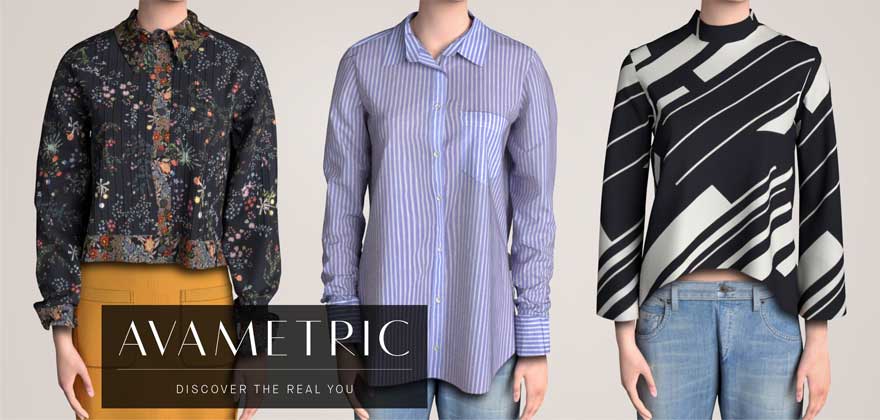
"I’m not actively working on DMM anymore. Pixelux still maintains it and adds features with occasional new releases. Most of my time now is spent working on a new startup activity at a company called Avametric, where we're using cloth simulation to model clothing so customers can virtually try it on."

Is there anything you wish you could add to DMM, or change?

"We’ve done some new work on fracture simulation that uses adaptive meshing. I think that method would work very well for VFX, but it’s fairly different from the tetrahedral method that DMM is built on. So I don’t think Pixelux will pursue it. Perhaps another company will be interested?"

Was there a point where you realized your work was becoming very significant?

"Well, winning the Academy Award was nice. I think that the release of "Star Wars: The Force Unleashed" was another significant event, as was the first movie to use DMM extensively, "Sucker Punch." I’ve been told that DMM was used in a very small way in "Avatar," but "Sucker Punch" was really the first. Since "Sucker Punch," there have been a steady stream of films using DMM. Last time I looked, it was more than 80 of them. The Wikipedia page has a partial list of some of the places DMM has been used."

Are there any similar projects in "the wild" that you particularly admire?

"The fluid simulation Naiad by Robert Bridson is pretty impressive. However, their company was bought by Autodesk, and I think they are still working to integrate Naiad’s features into an Autodesk product. I’m excited to see what that will be."

If you were to adopt a different career, what would it be?

"Now, why would I want to do that?"

You mentioned a new virtual clothing try-on startup — can you tell me about the company?

"The company is Avametric, and we're focused on developing a system to allow people to virtually try on clothing online. Our system makes it easy for shoppers to capture the 3D measurements of their bodies, for retailers to acquire digital models of their clothing products, and for us to combine the data using physics simulation and realistic rendering to accurately show people how they will look in clothing before they buy it. Personally, I’m very excited about this new project. We are making fast progress, and the results are exciting."

Avametric

What inspired the new direction?

"In the past, I got a kick out of seeing my work end up in films where millions of people could enjoy it. But the thing with VFX is that if it’s done well, the viewer shouldn't even realize it’s an effect. With this clothing effort, people will be interacting directly with our simulated clothing. That’s going to be awesome."

James O’Brien is a Professor of Computer Science at UC Berkeley, where he teaches courses primarily in computer graphics and animation. He also currently serves as a Director-at-Large of ACM SIGGRAPH.

Call for Computer Graphics Award Nominations

Call for Computer Graphics Award Nominations

Each year, ACM SIGGRAPH bestows a small number of awards to members of the computer graphics community, in recognition of exceptional achievements in computer graphics and interactive techniques. Five of the these awards are given out annually, and one (the Steven Anson Coons Award for Outstanding Creative Contributions to Computer Graphics) is awarded every odd-numbered year.

Nominations for ACM SIGGRAPH awards are due very soon — and nominations from community members are strongly encouraged. Each award is presided over by a committee that carefully reviews each nomination, along with others the committee feels are worthy of consideration.

The ACM SIGGRAPH awards are as follows:

  • Distinguished Artist Award for Lifetime Achievement in Digital Art (nominations due to Artist Award Chair by December 15)
  • Computer Graphics Achievement Award (nominations due to Technical Awards Chair by January 31)
  • Significant New Researcher Award (nominations due to Technical Awards Chair by January 31)
  • Steven Anson Coons Award (nominations due to Technical Awards Chair by January 31 of each odd-numbered year)
  • Outstanding Service Award (nominations due to Outstanding Service Award Chair by January 31)
  • Outstanding Doctoral Dissertation Award (nominations due to Thesis Award Chair by January 31)

ACM SIGGRAPH awards are presented at the annual SIGGRAPH conference, the world's largest conference on computer graphics and interactive techniques.

This year marks the launch of a new ACM SIGGRAPH award, the Outstanding Doctoral Dissertation Award, which recognizes a recent Ph.D. graduate who has already made a notable contribution very early during their doctoral study.

Though some awards carry cash prizes, all ACM SIGGRAPH award winners receive a plaque, complimentary full conference registration and travel to the awards ceremony at SIGGRAPH.

For more information, or to submit a nomination for one of the awards, please see the ACM SIGGRAPH awards page.