Newly Formed Tehran ACM SIGGRAPH Chapter Flourishes

Newly Formed Tehran ACM SIGGRAPH Chapter Flourishes

It's becoming evident that Tehran, Iran, has a vibrant computer graphics community. The Tehran ACM SIGGRAPH Professional Chapter, founded in the spring of 2014, is already hosting events that draw crowds of attendees.

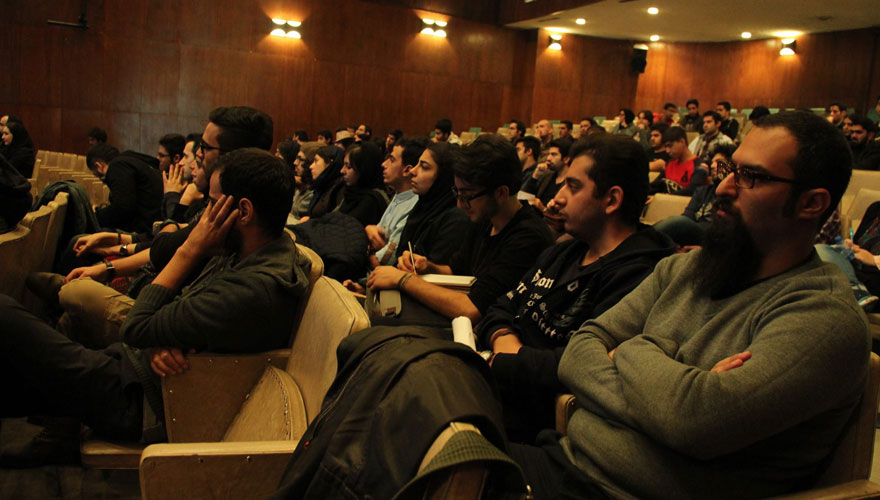
This month, Tehran ACM SIGGRAPH put on an event called "Post SIGGRAPH 2014," which was attended by more than 100 local CG enthusiasts. The organizers presented the audience with an overview of the SIGGRAPH 2014 conference, along with a rundown of the latest highlights in computer graphics research. Former ACM SIGGRAPH Vice President Paul Debevec sent the chapter a special video to play, giving attendees a sneak peek of the very latest technology being integrated into USC ICT's Light Stage, a cutting-edge system used to photorealistically light computer-generated characters, the likes of which can be found in blockbusters such as "Spider-Man 2," "King Kong," "The Curious Case of Benjamin Button" and "Avatar."

According to Tehran chapter leadership, the chapter's mission is to spread awareness of the field and bring local CG enthusiasts together to benefit from each other's knowledge and experience. Moving forward, Tehran ACM SIGGRAPH plans to host regular talks, workshops and seminars with experts and scholars who specialize in the science, art and technology of computer graphics.

For more information, visit the Tehran ACM SIGGRAPH Professional Chapter website.

To learn more about joining an ACM SIGGRAPH chapter in your area, or forming your own local chapter, visit the ACM SIGGRAPH chapters page of SIGGRAPH.org.

هدف از این فصل است که برای اتصال جامعه گرافیک کامپیوتری در تهران به طوری که آنها می توانند از دانش و تجربه یکدیگر بهره مند شوند. برای اطلاعات بیشتر، به وب سایت تهران ACM SIGGRAPH بروید.


ACM Transactions on Graphics Seeks Editor-in-Chief

ACM Transactions on Graphics Seeks Editor-in-Chief

ACM Transactions on Graphics is the foremost peer-reviewed journal in the field of computer graphics. The term of the journal's current editor-in-chief — Julie Dorsey of Yale University — is ending, and the ACM Publications Board has assembled a nomination committee to aid the board in its selection of Ms. Dorsey's successor, whose term will begin January 1, 2015. 

Nominations are invited for qualified candidates able to committ to a three-year term as TOG EiC. The position is voluntary, with administrative support provided by ACM. 

From the ACM TOG Call for Nominations:

The EiC is responsible for maintaining the highest editorial quality, for setting technical direction of the papers published in TOG, and for maintaining a reasonable pipeline of articles for publication. He or she has final say on acceptance of papers and appointment of associate editors. The EiC is expected to adhere to the commitments expressed in the policy on Rights and Responsibilities in ACM Publishing.
Each nomination should include a vita along with a brief statement of why the nominee should be considered. Self-nomination is encouraged, and should include a statement of the candidate's vision for the future development of TOG. The deadline for submitting nominations is November 30, 2014, although nominations will continue to be accepted until the position is filled. Please send nominations to the nominating committee chair: Jessica Hodgins (jkh AT cs.cmu.edu).

For more information on the position requirements and responsibilities, visit the ACM TOG website and ACM's evaluation criteria for editors-in-chief.

About ACM Transactions on Graphics (from the TOG website):

The purpose of the ACM Transactions on Graphics (TOG) is to further the development of computer graphics by encouraging high-quality research in the field and disseminating that research rapidly and widely. The term "computer graphics" is interpreted broadly. It includes, but is not limited to, work on animation, computer-aided design, color, computational geometry, computational photography, geometric modeling, graphics hardware, human factors, image synthesis, interaction techniques (both 2D and 3D), lighting models, physical simulation, real-time techniques, and rendering. Computer graphics is more than an academic discipline; it is an eclectic and heterogeneous field with wide-ranging applications. Consequently, TOG accepts papers on novel applications as well as traditional research contributions.
ACM Turing Award Prize Quadrupled to $1 Million

ACM Turing Award Prize Quadrupled to $1 Million

The Association for Computing Machinery's A.M. Turing Award has been described as the "Nobel Prize of Computing," and is revered by many as the greatest honor in the field. Though highly regarded by computing professionals, the Turing Award comes with a monetary prize that, while significant, has traditionally been much smaller than other cash awards disbursed with prizes of similar gravity, such as the Nobel Prize. The 2013 Nobel Prizes were accompanied by cash awards of 8 million Swedish krona (roughly equivalent to $1 million U.S. dollars). Last year's Turing Award prize was $250,000.

On November 13, the Association for Computing Machinery announced that the funding level for the Turing Award will be quadrupled to $1 million, thanks to Google, which is providing the prize. The new prize amount will go into effect for the 2014 award, the recipient of which will be announced in 2015.

Stuart Feldman, Vice President of Engineering at Google Inc., explained the reason for Google's hefty financial support: "We think it’s important to recognize when people make fundamental contributions in computer science," he said, "and we want to help ACM raise awareness of these innovators and the contributions they’ve made to the world."

The A.M. Turing Award has been given out once a year since its inception in 1966. It was named in honor of Alan Mathison Turing (1912–1954), a British mathematician and computer scientist who made fundamental advances in computer architecture, algorithms, formalization of computing, and artificial intelligence that paved the way for innovations that changed the world. ACM's most prestigious technical award, the Turing Award is given in recognition of major contributions of lasting importance to computing.

"The Turing Award is now funded at the monetary level of the world's most prestigious cultural and scientific awards and prizes," said ACM President Alexander Wolf, Professor of Computing at Imperial College London. "With the generous support of Google, we can celebrate the mainstream role of computing in transforming the world and the way we communicate, conduct business, and access entertainment. We can also commemorate the pioneering, fundamental contributions of our ACM Turing Award recipients in advancing computing as a science and a profession."

Visit the ACM A.M. Turing Award website to learn more about past recipients of the prize and their achievements. 

Nominations for the 2014 ACM A.M. Turing Award are open until November 30, 2014.

Submit Your Work to SIGGRAPH 2015

Submit Your Work to SIGGRAPH 2015

SIGGRAPH 2015 is the 42nd occurrence of the world's largest international conference on computer graphics and interactive techniques. The conference and exhibition will take place in Los Angeles from August 9 to 13, and is expected to draw attendance in the tens of thousands.

Widely recognized as the most prestigious forum for the publication of computer graphics research, SIGGRAPH is a showcase for the latest advances in everything touching on computer graphics and interactive techniques. The conference also hosts the international SIGGRAPH Computer Animation Festival, which is recognized by the Academy of Motion Picture Arts and Sciences as a qualifying festival for the Academy Awards. Over the years, several films from the SIGGRAPH Computer Animation Festival have made it to the Academy Awards, some even going so far as to take home the Oscar for Best Animated Short. 

The SIGGRAPH conference consistently delivers an impressive variety of art, research and technology, with all of the juried content representing the highest caliber of technical skill and creative talent. For more information on the types of work that can be submitted to SIGGRAPH 2015, or to submit your work for consideration, follow the links below.

19 January 2015 (Submission form due)
20 January 2015 (Paper deadline)
21 January 2015 (Upload deadline)

More Information for Submitters

Please note that every piece submitted to SIGGRAPH 2015 through the Call for Submissions is reviewed by a highly qualified jury composed of top practitioners in the relevant field. To allow adequate time for the juries to review the submissions, deadlines are several months ahead of the conference. All submission deadlines are strictly enforced, and deadlines are 22:00 UTC/GMT. 

SIGGRAPH 2015 preview with Conference Chair Marc Barr and the SIGGRAPH 2015 committee chairs.
Nominations Sought for Distinguished Artist Award

Nominations Sought for Distinguished Artist Award

The ACM SIGGRAPH Distinguished Artist Award is given out once a year to an artist who has created a substantial body of work that significantly advances the field of digital art. ACM SIGGRAPH members are warmly invited to nominate individuals for the 2015 Distinguished Artist Award by contacting the ACM SIGGRAPH Artist Award Chair. Nominations are due by December 15, 2014.

The past recipients of the Distinguished Artist Award are Harold Cohen, Manfred Mohr, Jean-Pierre Hébert, Charles Csuri, Yoichiro Kawaguchi, Lynn Hershman Leeson and Roman Verostko.

Criteria for the Distinguished Artist Award:

  • The artist has been contributing internationally to the digital arts for more than 20 years. 
  • The artist has produced important work(s) referenced in digital art history/theory papers/books. 
  • The artist has established an unexplored area in the field of digital art/media art. 
  • The artist has been advancing the use of digital technologies in creative expression.
  • The artist has contributed to the history and/or theory and/or practice of digital art through writing and presentations at conferences and symposia.

Nominations should include as much information about the nominee as possible, specifically:

  • Name(s) of the individual(s) being nominated (address and/or phone number and/or email address are also appreciated).
  • References to websites with the artist's works and texts when applicable (multiple references are welcome).
  • Nominator's name, address, telephone number, fax number, and email address.
  • A statement by the nominator describing the significance of the artist's contributions according to the criteria above.

Only nominations submitted through the contact form on the SIGGRAPH website will be considered.