
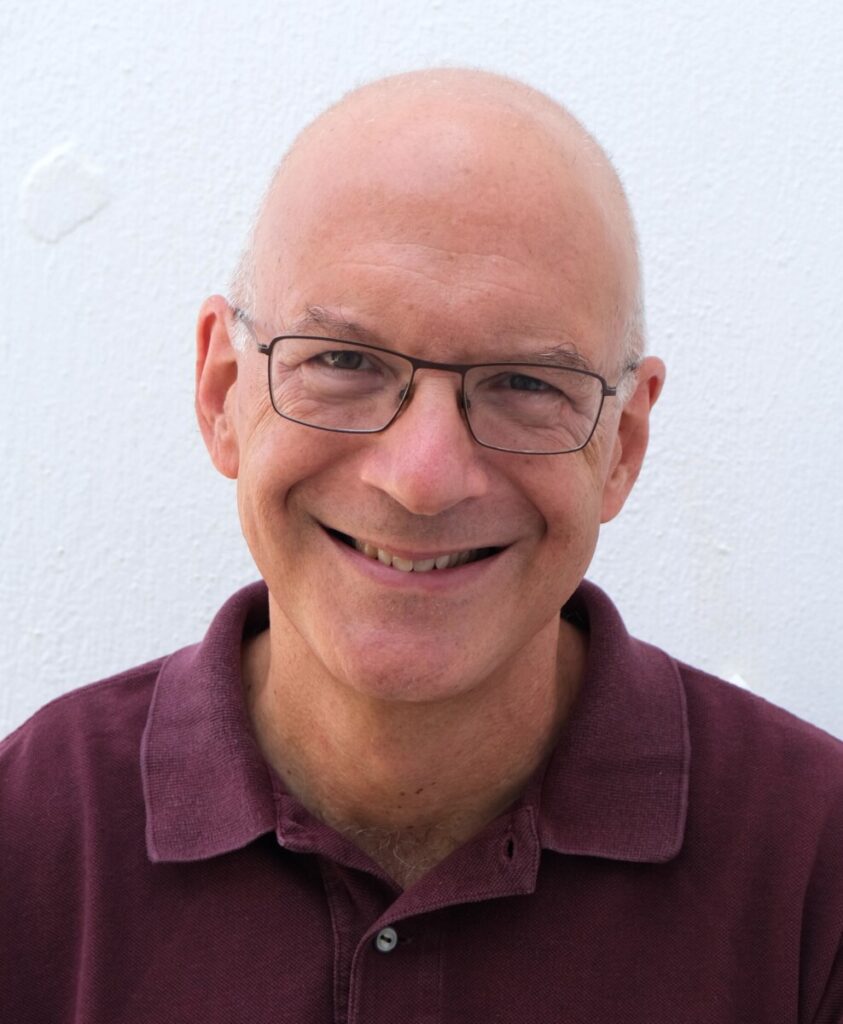
Member Profile: George Drettakis
1. What do you do, and how long have you been doing it?
I am a senior research at Inria, the French National Institute for Computer Science and Applied Mathematics. Inria has 9 centers all over France; I am located at Sophia-Antipolis near Nice in the French Riviera. I hold a permanent researcher position since 1995 when I was hired at Inria in Grenoble. Inria researchers conduct research, supervise graduate students and are also encouraged to be involved in applied research and technology transfer with industry. We don’t have any teaching obligations, but we do teach at the Masters level occasionally. Since 2000 I am also a group leader at Inria; our group has between 15-20 members including two other faculty who are also Inria researchers. An interesting aspect about Inria positions is that they are French State civil service jobs, and thus come with tenure after one year. This greatly helps work-life balance compared to the 5-6 (or more) years required to get tenure in North America or elsewhere. The most exciting part of the job is mentoring young students; each new person comes with different ideas and outlook, presenting exciting challenges and opportunity to solve new problems. I never get bored.
2. What was your first job?
My first job was as an undergraduate research assistant at the Research Institute for Computer Science in Crete. I was very lucky because the CS department and the Institute had just been created, so they hired undergraduates to work on the research programs they had, for the lack of more qualified personnel. It was an amazing opportunity since I was in touch with research from my second year of undergraduate studies, and I got to meet many great researchers who visited the Institute, including Leo Guibas and Rob Pike who both made a huge impression on me and influenced my career decisions afterwards.
3. Where did you complete your formal education?
I did my Bachelors at the University of Crete and then my Masters and Ph.D. at the University of Toronto and specifically at the Dynamic Graphics Project (DGP) under the supervision of Eugene Fiume. When I applied to grad school I had worked on Human-Computer Interaction, and I went to DGP intending to pursue that field, since Bill Buxton was a professor there. However, Bill was on leave, and I ended up working with Eugene in graphics instead; looking back, I realize that graphics is a much better match to what I like to do and what I am good at.
4. How did you first get involved with ACM SIGGRAPH?
As in any graphics lab, publishing at SIGGRAPH was the ultimate goal for students at DGP in Toronto. The lab also encouraged us to attend the conference providing some funding, so I was lucky to be able to go the SIGGRAPH starting in 1989 in Boston (the year the food ran out as people might remember — but at least there was a full dinner reception included in the registration!).
5. What is your favorite memory of a SIGGRAPH conference?
That is a tough question! I have lots of great memories from SIGGRAPH, and it is hard to single out one in particular. There have been lots of technical presentations that have been “aha moments” for me, inspiring future research, amazing technical discussions in the hallways with great colleagues, meeting up over a meal or drinks with colleagues who live all over the world and have become great friends, not to forget the great parties!
6. Describe a project that you would like to share with the ACM SIGGRAPH community.
Somewhat inevitably, 3D Gaussian Splatting (3DGS) is the project with the largest impact of all things I have worked on. I have given talks (e.g., https://www.youtube.com/watch?v=DjOqkVIlEGY) about how 20+ years of research led to this result that allows real-time navigation in 3D for real scenes captured with photographs, with reasonable processing times (nowadays in the order of minutes). One the overarching goals of my career has been to make 3D as accessible as say photos and video have become over the last 40 years. Several Ph.D. students, postdocs and interns worked on the ideas that put together all the pieces leading to 3DGS, starting with the early point-based and image-based rendering work, followed by the neural rendering work. The Ph.D. Of G. Kopanas, with the help of the GPU guru B. Kerbl — who was a postdoc in the group — brought it all together leading to this great result, which is now used extensively in VFX, e-commerce, construction, architecture and many more. Ironically, I spent 30 years of my career writing papers with introductions that talked about these as a potential applications (with only very occasional real-world use in the end) and this one result is used in all of them !
7. What is something most people don’t know about you?
Not many people know that I was born in the UK and lived there till I was nine. My parents are Greek and the family then moved back to Greece where I stayed until I finished my Bachelors degree. I was thus bilingual at birth (Greek at home and English everywhere else), which is an incredible advantage; it made it much easier to learn French later in life. Being a native English speaker has been a huge advantage professionally, making it easy for me to write papers, present at conferences and talk to colleagues. I was very lucky to be in this position.
8. From which single individual have you learned the most in your life? What did they teach you?
Many people have taught me a lot throughout my life, starting with my parents who gave me the basic principles of hard work and striving for excellence; I think this solid basis still guides me through life. Later, my professors at the University of Crete provided a solid and very complete undergraduate Computer Science education; I felt I had a better CS background than most Canadian students when I was doing my Masters in Toronto. My Ph.D. supervisor Eugene Fiume is the person who taught me the most, since when I arrived in Toronto I was a young student from a remote island in the Mediterranean, and when I finished I was a well trained researcher, ready to pursue my own research agenda at an international level. I would also like to mention two colleagues at Inria, Francois Sillion who shaped the early part of my career with his scientific rigor and excellence, and Adrien Bousseau who has always provided an excellent perspective on both the scientific and human aspects of research activities. Finally, my wife and two children, who constantly teach me how to become a better person.
9. Is there someone in particular who has influenced your decision to work with ACM SIGGRAPH?
The community at large provides the main motivation. I have been involved in the technical papers community over my entire career and the commitment, motivation and enthusiasm of the people who volunteer huge amounts of their time to make SIGGRAPH work is impressive. This is what makes me want to continue working with ACM SIGGRAPH.
10. What can you point to in your career as your proudest moment?
I think my proudest moment was when I received the ACM SIGGRAPH Computer Graphics Achievement award last year at SIGGRAPH. I have always considered this to be the ultimate recognition a graphics researcher can hope for. I didn’t really expect to receive this award, but I guess many years of hard work, and insisting on excellence does pay off!