
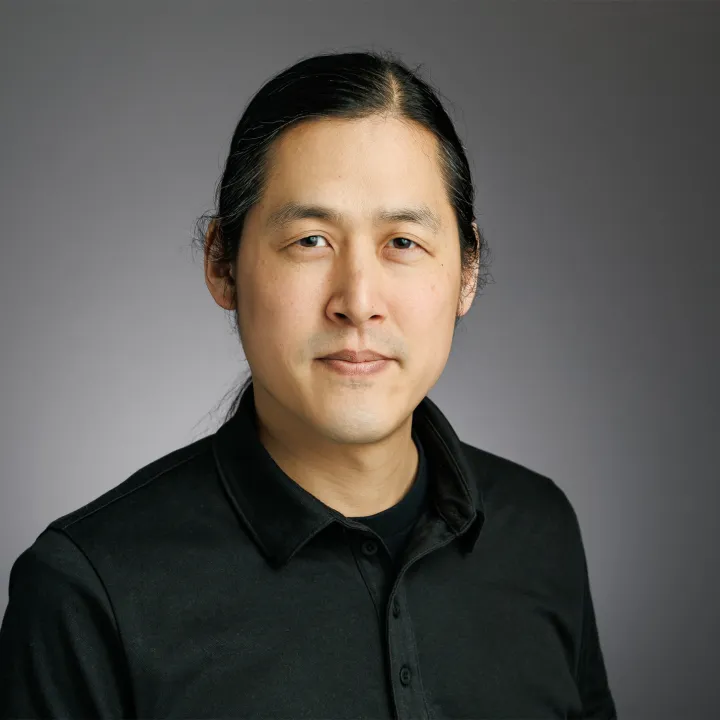
Member Profile: Theodore Kim
1. What do you do, and how long have you been doing it?
I have been a Professor of Computer Science at Yale for the last seven years. Before that, I was a Senior Research Scientist at Pixar for four years, and before that, a professor at the University of California, Santa Barbara, and before that at the University of Saskatchewan.
2. What was your first job?
In high school, I was a summer intern at the Naval Surface Warfare Center in Carderock, Maryland.
3. Where did you complete your formal education?
I got my Ph.D. from the University of North Carolina at Chapel Hill in 2006, advised by Ming Lin. I was a post-doc at IBM TJ Watson Research Center in 2007 and Cornell University in 2008.
4. How did you first get involved with ACM SIGGRAPH?
My first SIGGRAPH as an attendee was 2003 in San Diego. The first time I served on the General Submissions Jury was in 2011, and my first time on the Technical Papers Committee was 2015.
5. What is your favorite memory of a SIGGRAPH conference?
In 2021 during COVID lockdown, I gave a talk on “Anti-Racist Graphics Research”. Even though it was at the same time as the SIGGRAPH Awards ceremony, over 200 people showed up. Lots of people cared.
6. Describe a project that you would like to share with the ACM SIGGRAPH community.
Since 2021, I have been working with dozens of colleagues to bring more attention to the insidious racial assumptions that suffuse computer graphics algorithms. Our current algorithms for depicting skin and hair are widely perceived as universal, but are in fact designed for pale skin and straight hair. Our shared algorithms arrived at this unfortunate state because of deeply entrenched historical patterns that need to be examined and understood. At the same time, we must, and have been, designing new algorithms that step outside of this hegemonic frame.
7. If you could have dinner with one living or non-living person, who would it be and why?
Bui-Tuong Phong, the inventor of the Phong shading and reflectance models. He died tragically young at age 32 in 1975 and never got to see his work show up in movies and computer graphics textbooks around the world. I would ask him what he thought of the algorithm being named “Phong shading” even though his last name was “Bui-Tuong”, and what it was like being the only Asian computer graphics Ph.D. student at the University of Utah during his time there.
8. What is something most people don’t know about you?
As an undergraduate I minored in English Literature. That education has informed my research just as much as my computer science degrees.
9. From which single individual have you learned the most in your life? What did they teach you?
Jubin Dave was my manager at Rhythm & Hues Studios when I was a summer intern there in 2001. All the coding conventions and software engineering practices I have used over the last 25 years came from him. Also, he convinced me to use Vim.
10. Is there someone in particular who has influenced your decision to work with ACM SIGGRAPH?
As an undergraduate I took a realistic rendering class taught by Phil Dutre. I don’t think I even knew about SIGGRAPH before then.
11. What can you point to in your career as your proudest moment?
The publication of our SIGGRAPH Asia 2024 paper, “Curly-Cue: Geometric Methods for Highly Coiled Hair”. It was the first paper on Black, Afro-textured hair to ever appear at SIGGRAPH in its entire 50-year history. When I showed some of the images to students here on campus, they audibly gasped.