
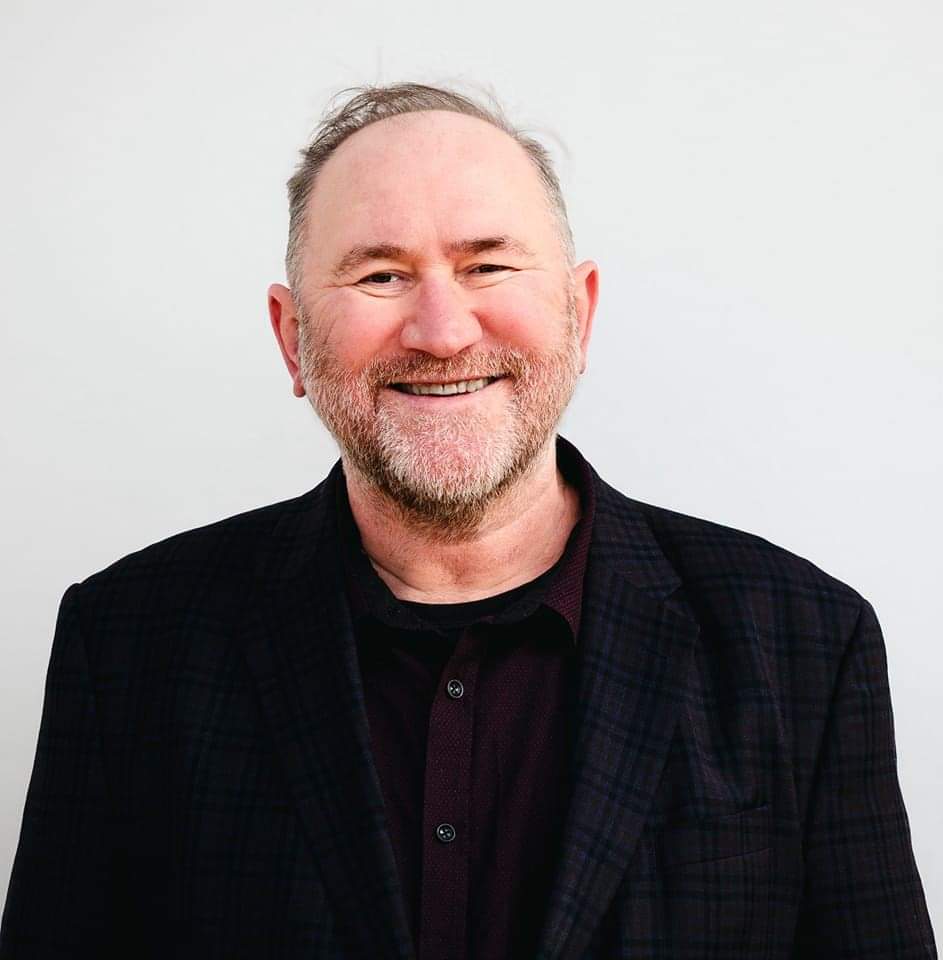
Member Profile: Melentie Pandilovski
1. What do you do, and how long have you been doing it?
I am a curator, cultural strategist, and researcher working at the intersection of art, science, and emerging technologies. For over 25 years, I have led institutions and developed projects across Australia, Canada, and Europe that examine how technological systems reshape culture, perception, and the human condition.
2. What was your first job?
My first job was founding LOGO, an early automatic data processing company in Skopje in the 1980s. In parallel, I began working with media installations, and by the 1990s I was part of a contemporary art scene where media art was still forming as a field—less a profession than a practice being invented in real time.
3. Where did you complete your formal education?
I completed a PhD in Cultural Studies at the Euro-Balkan Institute in Skopje, following studies in art history and archaeology at Sts Cyril and Methodius University. My work focuses on the cultural and philosophical implications of technological systems.
4. How did you first get involved with ACM SIGGRAPH?
My involvement grew from long-term engagement with media arts and international networks. It evolved into active participation in the Digital Arts Community, contributing to panels and programs on digital art and emerging technologies.
5. What is your favorite memory of a SIGGRAPH conference?
What stands out is the intensity of exchange—moments where artists, scientists, and theorists are not just presenting, but thinking together. I recall this strongly during SIGGRAPH 2023 in Los Angeles, particularly in conversations around blockchain and digital art practice, where the discussion extended far beyond the sessions themselves.
6. Describe a project that you would like to share with the ACM SIGGRAPH community.
A central thread in my work is the idea that we are already living inside a bio-society—where biological processes, data systems, and computational infrastructures are increasingly intertwined.
What interests me is how these systems become perceptible. We encounter them through images, interfaces, and visualisations that translate complex processes into perceptible form. This is where Vilém Flusser’s notion of technical images becomes critical: images that do not simply represent the world, but actively structure how we think and perceive it.
Through projects such as Art in the Biotech Era and The Rise of Bio-Society, I examine how these image-based systems operate not as neutral mediators, but as environments that actively shape perception. Their effects do not end there—they extend into memory, where experience is consolidated, selected, and retained over time. In this sense, memory is no longer simply something we have, but something increasingly shaped by the same technical systems that organise what we see.
Curating, in this context, becomes a critical practice: exposing how these systems operate, and where they might be questioned or reconfigured.
7. If you could have dinner with one living or non-living person, who would it be and why?
Ideally, a dinner with both Marshall McLuhan and Vilém Flusser—and I suspect it would turn into an argument. McLuhan framed media as environments shaping perception, while Flusser showed how technical images and apparatuses program thought itself. What interests me is where these positions collide today—within algorithmic and biological systems.
8. What is something most people don’t know about you?
My first media art installation in 1987 used broken television sets that I dismantled and reassembled into sculptural forms. It began as instinct: to take technology apart in order to understand it. That approach has stayed with me.
9. From which single individual have you learned the most in your life? What did they teach you?
Rather than one individual, I have been shaped by a constellation of thinkers—especially Marshall McLuhan and Vilém Flusser. McLuhan showed that media reshape human experience. Flusser sharpened this by revealing how technical images and apparatuses program perception and memory. Much of my work sits between these positions—examining how technologies are not just extensions of the human, but conditions that increasingly define it.
10. Is there someone in particular who has influenced your decision to work with ACM SIGGRAPH?
My engagement has been shaped less by a single individual than by a community—those working across disciplines who recognise that art is essential to understanding technological change.
11. What can you point to in your career as your proudest moment?
The most meaningful moments are shifts—when something opens up for others.
I have seen this across very different contexts: supporting refugee networks during the Balkan conflicts, building artist platforms in post-socialist societies, and developing international programs from regional Australia.
Developing SEAFair (Skopje Electronic Art Fair) and the International Limestone Coast Video Art Festival into international platforms were such moments—not because of scale, but because they demonstrated that critical cultural production can emerge from anywhere.
What matters is creating conditions where ideas take hold and continue beyond any one institution or individual.