
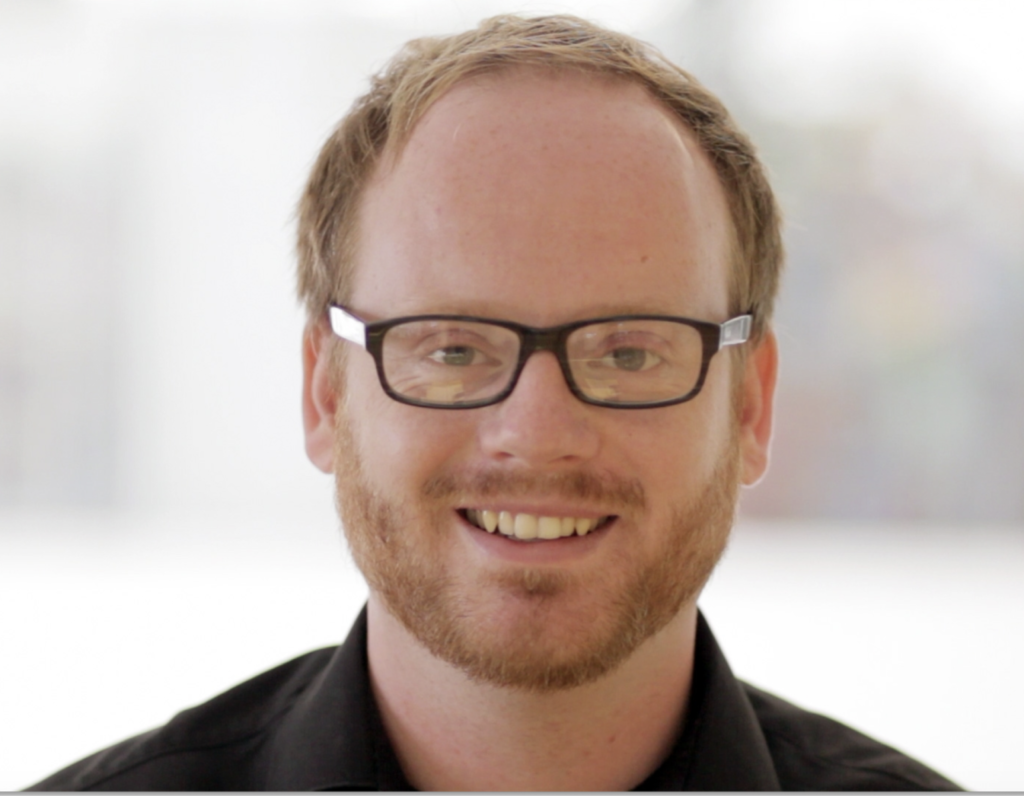
Member Profile: Gordon Wetzstein
1. What do you do, and how long have you been doing it?
I’m a professor at Stanford working at the intersection of computer graphics, computer vision, artificial intelligence, computational optics, and applied vision science. I’ve had this job for 12 years but if you count postdoc and PhD time, I’ve been working in the graphics field for 23 years.
2. What was your first job?
I worked as a janitor in a nursing home for more than a year directly after high school. Back then, military service or alternative military service a.k.a. Zivildienst (which was my job) was mandatory in Germany, where I grew up.
3. Where did you complete your formal education?
I completed my undergraduate training at the Bauhaus University in Weimar, Germany, where I developed a strong passion for graphics research and a deep love for the SIGGRAPH community. I then moved to UBC in Vancouver, Canada, where I completed my PhD in the Computer Graphics Lab, followed by a postdoc at the MIT Media Lab.
4. How did you first get involved with ACM SIGGRAPH?
My first SIGGRAPH was in 2003. Back then, I was a sophomore and didn’t have any money to attend the conference, so I applied to the student volunteer program at SIGGRAPH and was accepted. That covered most of the trip and I had a blast; I continued to serve as a student volunteer team leader for 5 additional years throughout my PhD. During my postdoc, I started serving regularly in the Technical Papers committee, the General Submissions committee, as the Courses Chair in 2016, and in various other roles.
5. What is your favorite memory of a SIGGRAPH conference?
At my first SIGGRAPH conference in 2003, I randomly ended up sitting next to Jim Blinn in the Electronic Theater. I happened to be a huge fan of his and also happend to have his book “A Trip Down the Graphics Pipeline” in my backpack at that moment. I asked him to sign the book and he wrote “Happy Graphics!”. I still have the book in my office shelf today and fondly remember how my journey started at that conference.
6. Describe a project that you would like to share with the ACM SIGGRAPH community.
A recent project we worked on is called “Generated Reality”. I’m really excited about this idea, because I believe emerging video generation to be a big part of the future of game engines for virtual reality and beyond. In our project, we tracked the head pose and joint-level finger information of the user in 3D and used it to condition a video generation model. The result is a video world model that you can navigate through and in which you can interact with objects using your hands. Sounds like any VR experiments today, but a video generation model can (soon) generate life-like immersive experiences in a zero-shot manner given just a text prompt and your imagination, without the need for building the game or environment first in Unity. I think this will be the first step towards what Neil Stephenson envisioned in his book “Snow Crash” – for the better or worse.
7. If you could have dinner with one living or non-living person, who would it be and why?
Ivan Sutherland. This man single-handedly arguably invented the fields of computer graphics, virtual & augmented reality, pen-based UI, among other fields by designing and prototyping the first optical see-through AR system in the 1960s.
8. What is something most people don’t know about you?
I’m a decent handyman – I learned a lot working as a janitor in a nursing home for a year.
9. From which single individual have you learned the most in your life? What did they teach you?
My grandfather: work harder than everyone else around you and think deeply about what you do and why you do it.
10. Is there someone in particular who has influenced your decision to work with ACM SIGGRAPH?
Oliver Bimber, who was my undergraduate advisor, sent two of my friends and I to attend the SIGGRAPH conference during our sophomore year to present a sketch talk. He paid for our flights and asked us to volunteer as part of the student volunteer program to get our conference registration and the hotel covered. This was the beginning of my graphics journey – it wouldn’t have happened without him. Thanks Oliver!
11. What can you point to in your career as your proudest moment?
Getting my first technical paper accepted (and presenting it) at SIGGRAPH in 2011. I don’t remember how many times I had unsuccessfully submitted before, but it was many. This was the last year of my PhD and SIGGRAPH happened to be in the city I lived in, Vancouver, for the first time that year. It was the perfect conference experience for me!