
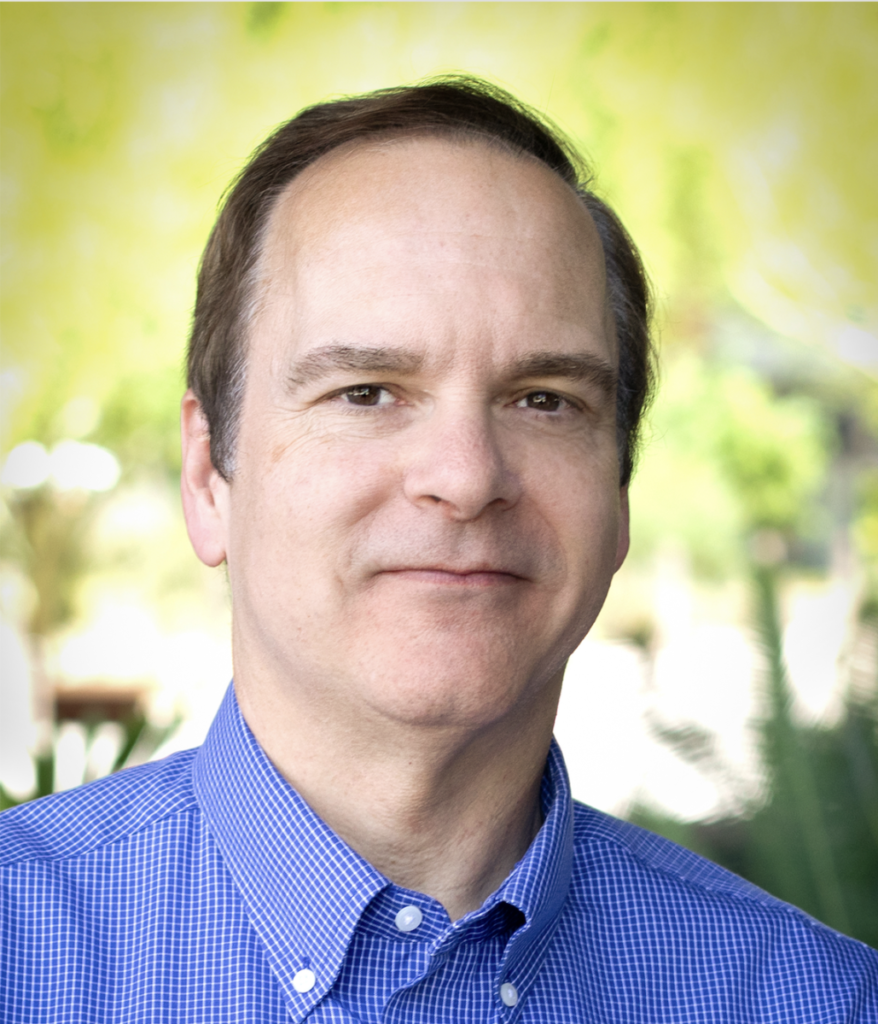
Member Profile: David Ebert
1. What do you do, and how long have you been doing it?
I am currently the Chief AI and Data Science Officer, an Associate Vice President for Research and Partnerships, Director of the Arizona Institute for AI and Society, and the Computer Science Engineering Endowed Innovation Chair in the Department of ECE at the University of Arizona.
2. What was your first job?
My first job was as an Instructor at The Ohio State University.
3. Where did you complete your formal education?
The Ohio State University
4. How did you first get involved with ACM SIGGRAPH?
I first became involved by submitting slides to the SIGGRAPH technical slide set, then by teaching courses on procedural modeling at SIGGRAPH. As a volunteer, I was on the courses committee, then chaired the Sketches program.
5. What is your favorite memory of a SIGGRAPH conference?
Having a long discussion with Turner Whitted about the early days of SIGGRAPH one evening, when I was on the conference committee, as we were all exhausted and relaxing in the hotel to get ready for the next day of SIGGRAPH 97.
6. Describe a project that you would like to share with the ACM SIGGRAPH community.
My career shifted from core computer graphics, including realistic rendering, animation, procedural modeling, and real-time graphics, to visualization, visual analytics, and then human-guided analytics and AI. Therefore, most members are probably unaware of the work I contributed to in defining the field of visual analytics and leading the U.S. Department of Homeland Security’s Visual Analytics for Command, Control, and Interoperability Environments (VACCINE) Center of Excellence, which involved 42 schools worldwide developing interactive tools for public safety, emergency response, analysis, and security.
7. If you could have dinner with one living or non-living person, who would it be and why?
This is a tough question. The first person who always comes to mind is Bruce Springsteen because I am always amazed by how he comes up with the lyrics to over 200 songs he has published, and I know he spends years reworking them until they are right. I have always wanted to know his motivation and how the process works.
8. What is something most people don’t know about you?
My first exposure to the combination of art and science was actually winemaking (6th grade) and not computer graphics. I came back to this decades later, and work with several wineries, vineyards, and winemakers, and have even judged international wine competitions.
9. From which single individual have you learned the most in your life? What did they teach you?
My mother, who constantly encouraged me to ask why, believed that I could do anything I want if I work hard enough at it, to give back to my community, to respect people for their talents, and to persevere.
10. Is there someone in particular who has influenced your decision to work with ACM SIGGRAPH?
My wife, Sue, encouraged me to take the opportunity to serve as the Sketches Chair at SIGGRAPH 97 and grow my work with SIGGRAPH, and the initial impetus is the value of giving back to my community, as my mother and father practiced their whole lives.
11. What can you point to in your career as your proudest moment?
That is probably a toss-up between publishing the book Texturing and Modeling, developing fundamental techniques used in graphics and animation, and deploying tools for police, emergency responders, and the U.S. Coast Guard that have saved lives.