
Shenzhen ACM SIGGRAPH Chapter Hosts International Workshop on CG Science & Technology Achievements

Shenzhen ACM SIGGRAPH Chapter Hosts International Workshop on CG Science & Technology Achievements

By Rick Mingjun Xu, Founder of the Shenzhen ACM SIGGRAPH Chapter

Since computer graphics and interactive technologies increasingly permeate our daily lives, we could hardly go back to the era without CG. Today, from an app, a film, a video game to VR/AR, 3D printing, face recognition, self driving cars, and even artificial intelligence, almost everything needs CG. In China, people are becoming more clear about how these marvelous technologies could benefit their lives. Teenagers enjoy using facial beautifying apps to polish their photos so that they will get more “likes” in social media. Parents know AR books will help them educate their children. Filmmakers love to add appealing VFX in films to engage larger audiences.

It is conceivable that China will become the biggest market for CG in the world, but there is still a gap between industry and academia here. The groups have not had enough contact with each other in the past. Thus, the Shenzhen ACM SIGGRAPH Chapter has taken this responsibility into its own hands, creating opportunities to help people from industry to interact with academia and vice versa.

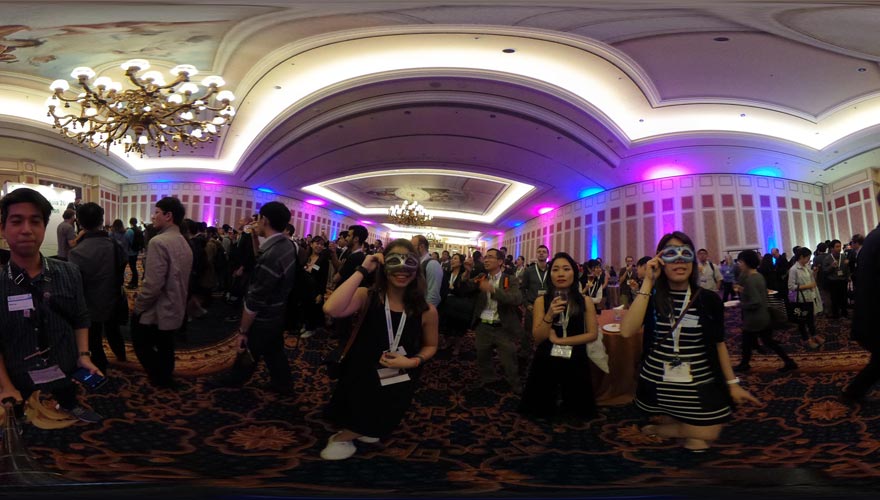
Shenzhen workshop participants

On March 25, 2017, supported by the Visual Computing Research Center (VCC) of Shenzhen University, the Creative Media Institute (CMI) of the City University of Hong Kong, and the Hong Kong ACM SIGGRAPH Chapter, Shenzhen ACM SIGGRAPH Chapter hosted an international workshop on CG Science & Technology Achievements Between Shenzhen & Hong Kong. There were more than 130 people in the audience, mostly from the industry. The Chair of Shenzhen Chapter, Rick Mingjun Xu, said it was a wonderful experience and honor to connect local industry professionals with researchers who are not only from the universities around Shenzhen and Hong Kong, but also from overseas. The event provided an example, for local Shenzhen people, of the value of the programs provided by the SIGGRAPH conference.

The workshop began with opening speeches from distinguished guests: Professor Hui Huang (Technical Briefs and Posters Co-Chair of SIGGRAPH Asia 2017), Hongbo Fu (Conference Chair of SIGGRAPH Asia 2015), and others.

Shenzhen workshop

Next, professors and researchers from VCC, CMI, and Hong Kong University presented, in total, 10 interesting and inspiring technical paper talks about various aspects in CG, such as Functionality Analysis of 3D Shapes Based on General Object-Object Interaction (presented by Prof. Ruizhen Hu), Computational displays and 3D visualization in artistic context (presented by Dr. Lam, Miu Ling), Automatic Image and Video Stylization Using Deep Neural Networks (presented by Prof. Yizhou Yu).

Shenzhen workshop

Besides the support from local academia, Shenzhen Chapter was honored by the presence of two brilliant scientists from Autodesk Research, who presented fabulous keynotes to the audience. Jos Stam, recipient of the SIGGRAPH Computer Graphics Achievement Award and two Academy Awards for Technical Achievement talked about the Art of Fluid Animation. Jacky Bibliowicz, also Chair of ACM SIGGRAPH Professional and Student Chapter Committee, talked about various projects using novel applications of computer graphics in other domains of science. Both keynotes attracted all the eyes of the audience and lead them on cutting-edge, fascinating CG journeys.

Shenzhen workshop

The workshop ended up with a panel discussion about the trend of CG industry and research in the upcoming future which was hosted by Michael Liang who was Featured Session Chair of SIGGRAPH Asia 2016.

Shenzhen workshop

Surveys distributed to the audience after the workshop indicated 9 our of 10 attendees significantly enjoyed the presentations and were looking forward to the next workshop. Many of them hope to attend SIGGRAPH and/or SIGGRAPH Asia in the future.

The Shenzhen Chapter will continue to organize more events in China in the near future to build more Chinese interest in ACM SIGGRAPH. Xu believes that the more Chinese citizens attend the SIGGRAPH conference, the tighter relationship between CG industry and academia in China will be.

Call for Participation: 2017 China International VR Animation Festival

Based in China and embracing the world, the 2017 China International VR Animation Festival, hosted by the Shenzhen ACM SIGGRAPH Chapter, is calling for submissions.

Are you an industry pioneer merging animation into VR? Now is a fabulous opportunity to showcase your talent, your skill, and your imagination in VR storytelling!

No matter if you are a CG professional or a student, we are looking forward to your participation. Please submit your VR animation from June 1 to October 31, 2017.

More information will be available on www.vranim.com in early June 2017.

Call for Submissions to the 6th Annual Faculty Submitted Student Work Exhibit

Call for Submissions to the 6th Annual Faculty Submitted Student Work Exhibit

The ACM SIGGRAPH Education Committee is seeking submissions to the 6th Annual Faculty Submitted Student Work Exhibit. Images and video will be displayed at the Education Committee Booth SIGGRAPH 2017 in Los Angeles, California, and assignments archived on the Education Committee website. The double curated exhibit is open to all faculty working at Secondary/High School through University levels.

The Education Committee is interested in images of work by your best students accompanied by the project assignment. Any content area is welcome: art, animation, graphic design, game design, architecture, visualization, real-time rendering, etc.

The deadline for submissions is June 19th, 2017.

Purpose

The exhibit gives your school the opportunity to showcase your student’s best work to the rest of the industry. After the conference, the entire presentation will be posted on the Education Committee website along with the corresponding project assignments to share with fellow faculty.

Submission Requirements

  • By Faculty/School – no individual student submissions accepted
  • Assignment(s) of submitted student work MUST accompany all video(s) and image(s) submitted. PDF format preferred. Student work will NOT be accepted without corresponding assignments.
  • All submissions will use the provided PowerPoint Template: FFSW_Template_2017.ppt

Still Images

  • Images should be placed in the PowerPoint template.
  • Metadata filled in.
  • Preferred resolution 1280×720 (JPG/TIFF/PNG format/RGB)
  • LIMIT: 50 images per school/university

Video

  • Please upload all videos individually to either YouTube.com or Vimeo.com.
  • Send video URLs (Word doc).
  • Please DO NOT send actual videos.
  • Screen caps/still images of videos should be included.
  • Metadata filled in.
  • Preferred resolution 1280×720 or larger 16:9 aspect ratio format.
  • Audio can be included (*may or may not be audible during the conference)
  • Video can be short individual clips or full projects/films.
  • Videos will be downloaded and embedded in the final PowerPoint screened at the conference. After the conference, the still image and URL will replace the videos in the downloadable PDF version of the PowerPoint located on our site.
  • LIMIT: 10 minutes of video per school/university

Metadata for all images and videos should include:

  • Student(s) name
  • School name
  • Program/Department
  • Faculty name
  • Project name

Submission Options

  • Public folder in Dropbox.com, Hightail.com, WeTransfer.com or other similar file-sharing site with links sent to curator (Kevin.McNulty[at]mtsu.edu).
  • Physical DVD or flash drive (not returned) snail-mailed to curator (Kevin McNulty).

Due to the anticipated size of files, direct email of submissions will not be accepted.

The SIGGRAPH Education Committee retains the right to archive the project description on our web site for fair use by other faculty.

Materials will be licensed under the Creative Common Attribution – NonCommercial-ShareAlike 3.0.

Physical Submissions

Kevin McNulty
Dept. of Electronic Media Communication
Middle Tennessee State University
Box 58
1500 Greenland Drive
Murfreesboro, TN 37132

Additional information/clarification electronic submissions
Kevin McNulty – Kevin.McNulty [at] mtsu.edu

Deadline June 19th, 2017

Call for Participation: SIGGRAPH Asia 2017

SIGGRAPH Asia 2017 invites you to submit your best works and creative innovations at the 10th ACM SIGGRAPH Conference and Exhibition on Computer Graphics and Interactive Techniques in Asia, taking place from 27-30 November 2017 at the Bangkok International Trade & Exhibition Centre (BITEC) in Bangkok, Thailand.

Join hundreds of fellow scholars, creative practitioners and industry professionals in the computer graphics and interactive techniques industry, and submit your best works to the respective conference program listed below.

Don't miss your chance to shine at Asia’s largest computer graphics and interactive techniques event!

2017 Conference Program Submission Deadlines

  • 8 May 2017: Workshop Proposals
  • 23 May 2017: Technical Papers
  • 30 May 2017: Emerging Technologies
  • 18 June 2017: Art Gallery
  • 13 June 2017: Symposium on Education
  • 21 June 2017: Symposium on Mobile Graphics & Interactive Applications
  • 28 June 2017: Courses
  • 29 June 2017: Symposium on Visualization
  • 19 July 2017: Computer Animation Festival
  • 30 July 2017: VR Showcase
  • 15 August 2017: Posters, Technical Briefs, Workshop Papers

The submission time for all deadlines is 23:59 UTC/GMT. Time conversion zone.

Visit the SIGGRAPH Asia 2017 website for more details and to submit.

Call for Participation: Motion in Games 2017

The 10th ACM International Conference on Motion in Games (MIG 2017) will take place in Barcelona, Spain from November 8-10, 2017 and will be hosted by UPC (Universitat Politècnica de Catalunya). MIG is sponsored by ACM and held in cooperation with Eurographics.

Motion plays a crucial role in interactive applications, such as VR, AR, and video games. Characters move around, objects are manipulated or move due to physical constraints, entities are animated, and the camera moves through the scene. Even the motion of the player nowadays is used as input to such interactive systems.

Motion is currently studied in many different areas of research, including graphics and animation, game technology, robotics, simulation, computer vision, and also physics, psychology, and urban studies. Cross-fertilization between these communities can considerably advance the state-of-the-art in the area.

The goal of the Motion in Games conference is to bring together researchers from this variety of fields to present their most recent results, to initiate collaborations, and to contribute to the establishment of the research area. The conference will consist of regular paper sessions, poster presentations, and as well as presentations by a selection of internationally renowned speakers in all areas related to interactive systems and simulation. The conference includes entertaining cultural and social events that foster casual and friendly interactions among the participants.


Important Dates

Papers

  • Paper submission: July 19th, 2017
  • Paper notification: August 28th, 2017
  • Camera-ready: Sept 11th, 2017

Posters

  • Poster submission: Sept 4th, 2017
  • Poster notification: Sept 11th, 2017

Conference Leadership

Conference Chair

Nuria Pelechano, Virvig, UPC, Spain

Program Chairs

  • Carol O’Sullivan, Trinity College Dublin, Ireland
  • Julien Pettré, Inria, France

Paper Publication

All of the accepted regular papers will be archived in the EG and ACM digital libraries. The top 10% papers will be selected for publication in a special section of the Elseviers Computers & Graphics.

Topics of Interest

The relevant topics include (but are not limited to):

  • Animation Systems
  • Animation Algorithms and Techniques
  • Character Animation
  • Behavioral Animation
  • Facial Animation
  • Particle Systems
  • Simulation of Natural Environments
  • Natural Motion Simulation
  • Virtual Humans
  • Physics-based Motion
  • Crowd Simulation
  • Path Planning
  • Navigation and Way-finding
  • Flocking and Steering Behaviour
  • Camera Motion
  • Object Manipulation
  • Motion Capture Techniques
  • Motion Analysis and Synthesis
  • Gesture Recognition
  • Interactive Narrative

All papers will be reviewed carefully by the International Program Committee members through a double blind process, with at least four reviewers per paper.

Papers

We invite submissions of original, high-quality papers in any of the topics of interest (see below). Each submission should be 7-10 pages in length for the long papers or 4-6 pages for the short papers, and will be reviewed by an international program committee for technical quality, novelty, significance, and clarity. All of the accepted regular papers will be archived in the EG and ACM digital libraries. All submissions will be considered for Best Paper Awards. Best Paper, Best Student Paper, and Best Presentation awards will be conferred during the conference.

The top 10% papers will be selected for a special issue in the Computer&Graphics journal (5 year impact factor: 1.089)

Posters

Two types of work can be submitted directly for poster presentation: (1) Work that has been published elsewhere but is of particular relevance to the MIG community can be submitted as a poster. This work and the venue in which it was published should be identified in the abstract. (2) Work that is of interest to the MIG community but is not yet mature enough to appear as a long paper.

Posters will not appear in the official MIG proceedings but will appear in an online database for distribution at author's discretion.

Accepted papers will be presented at the conference during oral sessions, or as posters during a poster session. Best Paper and Best Student Paper awards will be conferred during the conference.

Submission

Papers should be formatted using the SIGGRAPH formatting guidelines (sigconf). To submit, please visit the MIG 2017 website.