
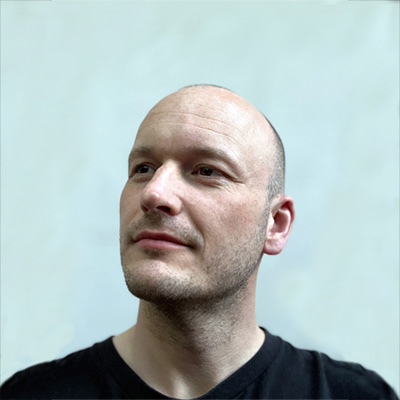
Member Profile: Soeren Pirk
1. What do you do, and how long have you been doing it?
I am a professor of computer science at Kiel University, where I lead the Visual Computing and Artificial Intelligence group. My work sits at the intersection of computer graphics, AI, robotics, physical simulation, and environmental modeling. In particular, my group works on embodied AI and robotics, generative AI and synthetic data, digital twins for wildfires, and physically based simulations of natural phenomena. I have been working in visual computing and computer graphics for well over a decade. My formal research path began during my studies and PhD work in computer science, and since then I have worked in academia and industry, including Esri R&D, Stanford University, Google AI, Adobe Research, and now Kiel University.
2. What was your first professional role after completing your PhD?
My first professional role after my PhD was at Google, where I worked as a software engineer and researcher. This experience allowed me to connect my interests in visual computing, geometry, artificial intelligence, robotics, and large-scale real-world data, while working on problems with broad practical impact.
3. Where did you complete your formal education?
I completed my Dipl.-Ing. degree in Computer Science at the University of Applied Sciences Emden in Germany, and I received my PhD from the Faculty of Computer and Information Science at the University of Konstanz, where I worked in the Visual Computing Lab.
4. How did you first get involved with ACM SIGGRAPH?
My involvement with ACM SIGGRAPH grew naturally out of my research in computer graphics and visual computing. SIGGRAPH has always been the central venue for the kind of work I care about: combining technical depth with visual, creative, and often interdisciplinary impact. Over the years, I became involved through publishing and reviewing. I have reviewed for ACM SIGGRAPH across many years and have also helped organize a SIGGRAPH course.
5. What is your favorite memory of a SIGGRAPH conference?
My favorite memory is probably the first time I presented my work at SIGGRAPH and saw it discussed by the community. Presenting in front of a large professional audience of hundreds of people was an incredible experience. It was a moment where years of research suddenly became part of a much larger conversation, and it made me feel connected to the international graphics community.
6. Describe a project that you would like to share with the ACM SIGGRAPH community.
A project I would like to share is our ongoing work to develop digital wildfire twins. Wildfires are among the most destructive and difficult-to-predict natural disasters, and our goal is to combine detailed 3D ecosystem modeling, physical simulation, photorealistic imagery, and AI-driven tools to support real-time wildfire simulation and decision-making. This work connects computer graphics, environmental modeling, simulation, and AI in a way that I think is highly relevant to the SIGGRAPH community. This direction includes several projects that we presented at SIGGRAPH such as Fire in Paradise, Scintilla, Fire-X, Synthetic Silviculture, and Ecoclimates.
7. If you could have dinner with one living or non-living person, who would it be and why?
I would choose Leonardo da Vinci. He combined science, engineering, art, anatomy, mechanics, and imagination in a way that still feels remarkably modern. Much of my own field lives at the intersection of technical rigor and visual creativity, and I would love to talk with him about how he observed the natural world, how he thought about representation, and how he moved so fluidly between disciplines.
8. What is something most people don’t know about you?
Most people probably don’t know that the spark for my research career began during my diploma graduate studies in Germany, when I had the opportunity to spend time at the HIT Lab in New Zealand in 2007. Back then, augmented reality was not really a mainstream topic yet, and I worked on refractive and reflective objects for augmented reality. This gave me an early sense of how exciting it can be to combine visual computing, perception, and interactive technologies. Raphael Grasset and Mark Billinghurst were important mentors during that time, and their guidance helped shape my interest in research.
9. From which single individual have you learned the most in your life? What did they teach you?
I have learned a great deal from my academic mentors Oliver Deusen, Leonidas Guibas, and Bedrich Benes, especially during my PhD and postdoctoral years. What they taught me was not only how to do research, but how to ask better questions: how to identify a problem that matters, how to be persistent when the answer is not obvious, and how to communicate ideas clearly enough that others can build on them.
10. Is there someone in particular who has influenced your decision to work with ACM SIGGRAPH?
Rather than one single person, I would say it was the broader SIGGRAPH community that influenced me. Seeing researchers present work that was technically ambitious, visually compelling, and often surprising made me want to be part of that community. My collaborators, mentors, and colleagues in computer graphics also reinforced the idea that SIGGRAPH is not just a conference venue, but a place where the field defines many of its future directions. This influence also played an important role in my decision to pursue an academic career and ultimately become a professor, so that I could contribute to the community through research, teaching, mentoring, and service.
11. What can you point to in your career as your proudest moment?
One of my proudest moments is building the Visual Computing and Artificial Intelligence group at Kiel University. It brings together many research directions that have shaped my career: visual computing, AI, robotics, simulation, environmental modeling, and generative methods. I am especially proud that the group works on problems that are both scientifically challenging and societally relevant, such as digital twins for wildfires and embodied AI systems.
Another source of pride is seeing my PhD students’ work contribute to major venues such as SIGGRAPH and SIGGRAPH Asia. The most rewarding part is not a single paper or title, but helping create research and topics that spark ideas in others.