
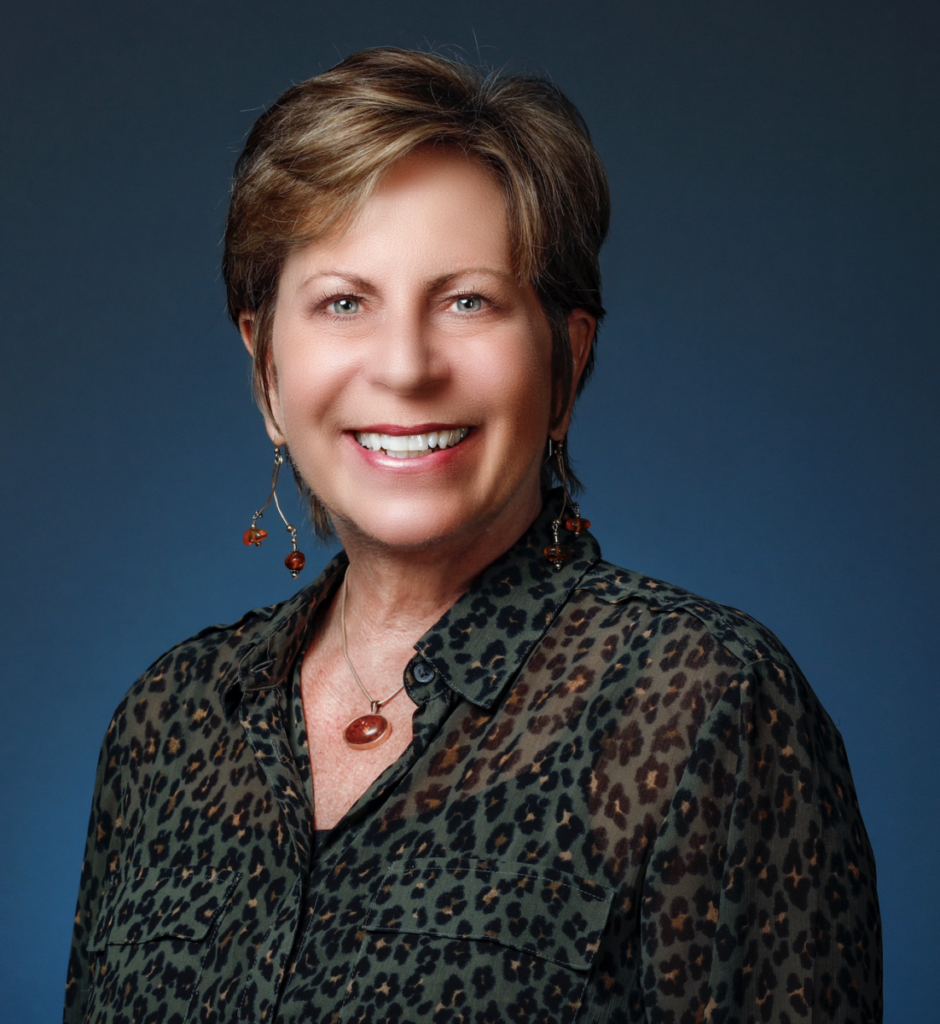
Member Profile: Dana Plepys
1. What do you do, and how long have you been doing it?
I recently retired after 36 years as Associate Director of the Electronic Visualization Laboratory (EVL) at the University of Illinois Chicago. My responsibilities evolved considerably over those years and included lab operations, research and business administration, project management, web design, proposal development, and technology transfer with industry partners.
Tom DeFanti, EVL Co-founder and Director Emeritus, initially hired me to produce videotapes documenting EVL’s research projects. That quickly expanded into other areas, including web development and working with the National Center for Supercomputing Applications (NCSA) team to enhance the Mosaic web browser’s user interface and features.
As EVL grew, my role shifted toward developing multi-million-dollar proposals for funding agencies and managing post-award administration. Eventually, that became a major part of the foundation for the lab’s operations and research projects.
But my real job was always about supporting the people at EVL. My priority was our graduate students, researchers, and faculty. I wanted to make sure they had the support and resources they needed to do their best work. Behind the scenes, I focused on the unit’s administrative, financial, and business affairs so our researchers could spend their time and energy where it mattered most – on their research.
2. What was your first job?
My first job was with a small business forms manufacturer, where I did a little bit of everything – reception, graphic design, and keypunching data into the company’s newly acquired IBM mainframe computer.
That was my first exposure to computing. At the time, I certainly didn’t imagine that sitting at a keypunch machine would eventually lead to a 36-year career in computer graphics and visualization.
Looking back, the combination of art and technology that became such a big part of my career was already beginning to emerge.
3. Where did you complete your formal education?
I earned my Bachelor of Fine Arts in Photomechanical Printmaking (1981) from the School of the Art Institute of Chicago, and my Master of Fine Arts in Electronic Visualization (1984) from the University of Illinois Chicago.
My path from photomechanical printmaking to electronic visualization may seem like an unlikely one, but it actually reflects how my interests evolved. I was always interested in the intersection of art, technology, and new ways of making and communicating images. Electronic Visualization gave me a way to bring those interests together.
4. How did you first get involved with ACM SIGGRAPH?
I was a student volunteer at the 10th annual SIGGRAPH Conference, SIGGRAPH ’83, in Detroit, Michigan. As a graduate student at EVL, Copper Giloth and Jane Veeder invited me and some of my fellow students to help install the Art Show.
I also assisted the AV crew, headed by Phil Morton of Video Research Consultants, with videotaping the conference. A team of us was given a Porta-Pak video camera and essentially told to document as much as we could. We wandered around the conference capturing whatever seemed interesting.
Those videos were later used to produce promotional materials and became an early archive of conference content. For me, SIGGRAPH ’83 was an introduction to a community that would become a major part of my professional life.
I had no idea at the time that I would still be involved with SIGGRAPH more than 40 years later.
5. What is your favorite memory of a SIGGRAPH conference?
In the early days, the Electronic Theater was a coveted event, with thousands of attendees lining up to get the best possible seats. The excitement and anticipation were incredible.
I will never forget the Electronic Theater at SIGGRAPH ’91 in Las Vegas. Loren Carpenter put on what I believe was one of the first large-scale interactive pre-show events. Thousands of attendees collectively played Pong using red and green retro-reflective paddles to control a massively projected version of the game in real time.
It was great fun trying to find your own paddle on the screen while coordinating with your team to control the movement of the puck. The scale of the experience was extraordinary.
What I remember most is that, for a few minutes, thousands of people in the audience weren’t just watching a computer-generated image – they were collectively controlling it. That was a very SIGGRAPH moment.
6. Describe a project that you would like to share with the ACM SIGGRAPH community.
Early in my career, I had the opportunity to work on Telaction, one of the first interactive cable television shopping systems. In 1988, Telaction, a subsidiary of JCPenney, launched a field test in which viewers used their touch-tone telephones to browse onscreen menus, navigate electronic catalogs, and make purchases for delivery to their homes.
At the time, it was remarkable to give viewers control over what they saw and purchased. In many ways, it was an early version of Amazon on your television, using a cable set-top box and telephone modem – decades before broadband Internet made that kind of interaction commonplace.
Telaction emerged at a fascinating moment when videotex, cable experiments, interactive graphics, and computer-controlled television systems were beginning to converge. I had the privilege of producing the computer graphics for the catalogs and eventually became manager of the graphic design team.
The system was nicknamed “Shopping at the Speed of Light,” which now seems almost prophetic.
Unfortunately, the experiment did not achieve the expected return on investment. After about a year and a half, JCPenney pulled the plug following an investment of approximately $106 million.
Although Telaction itself did not survive, the experience gave me an early look at the possibilities of interactive media and the convergence of graphics, computing, telecommunications, and television – technologies that would eventually become commonplace.
7. If you could have dinner with one living or non-living person, who would it be and why?
I would relish having dinner with Peggy Guggenheim, preferably sitting among her remarkable collection in her 18th-century palazzo on the Grand Canal in Venice.
Guggenheim was an American heiress, art collector, and patron of 20th-century modern art. She didn’t simply collect art – she helped give many of the artists she championed a platform when they were still relatively unknown. Her collection includes works by Pollock, Picasso, Dalí, Magritte, Mondrian, Miró, Ernst, Duchamp, Calder, Brancusi, and Kandinsky.
She was fiercely independent and led a remarkably colorful social and romantic life, moving among artists, writers, and intellectuals. I would love to hear her stories firsthand – especially her escapades with artists who were not yet famous and, of course, the debauchery that ensued.
I would also love to hear what she thought of the reception when she brought her collection to the 1948 Venice Biennale. Imagine having dinner with her and asking, “So, Peggy, what really happened?”
8. What is something most people don’t know about you?
My last name, in Lithuanian, means “chatterbox.”
Those who know me know the title fits.
9. From which single individual have you learned the most in your life? What did they teach you?
Over my lifetime, I have been influenced by so many people, both personally and professionally, that it is impossible to name a single individual.
Instead, I come from an incredibly close family, and I owe both of my parents my deepest gratitude. They emigrated from Lithuania to the United States to escape the oppression of the Soviet Union, not knowing English and bringing very little with them. They arrived as poor immigrants and, through hard work and determination, became professionals, raised a family of five, and achieved what I think of as the “American Suburban Dream.”
They taught me the value of hard work, dedication, respect, education, and maintaining a healthy work-life balance. They also supported me through all of my various endeavors and shenanigans – from being a punk rocker and wild artist to becoming an educator, mentor, and Media & Entertainment professional.
They are both still alive, at 94 and 98, and continue to influence and guide me. I am incredibly fortunate to have such a loving family.
10. Is there someone in particular who has influenced your decision to work with ACM SIGGRAPH?
Without question, Tom DeFanti.
Tom recruited me to edit the videotape collections that became the SIGGRAPH Video Review (SVR), a video publication documenting the latest developments in computer graphics, animation, scientific visualization, interactive technologies, virtual reality, and related fields.
The SVR primarily consisted of works shown at the annual SIGGRAPH Computer Animation Festival and other conference venues. It began as a videotape publication and evolved over the years to DVD, USB drives, and eventually digital streaming. Each transition meant learning new production and distribution technologies, but the real privilege was having a front-row seat to the evolution of computer graphics over several decades.
More than 180 issues and programs comprise the SVR, creating an important historical archive of computer graphics technologies and techniques. I am grateful to Tom for introducing me to SIGGRAPH and giving me the opportunity to produce the publication for more than 31 years. Over the last decade, the SVR has been digitized and securely archived online. The Charles Babbage Institute has also accepted the many master videotapes for preservation.
There is something very satisfying about that. The videotapes that I helped produce for decades are now being preserved as part of the history of computing. It seems fitting that the masters of the SVR should find their resting place in a research center devoted to preserving that very history.
11. What can you point to in your career as your proudest moment?
Over my 36 years with EVL, I have been privileged to serve on many graduate thesis committees and mentor a significant number of alumni. Many of these students have gone on to incredibly successful careers in computer graphics, the film industry, research institutions, and commercial industry.
Their work and success are an incredible source of pride for me. I feel fortunate to have contributed, even in some small way, to their education and professional development.
The EVL motto is, “Once an EVLer, always an EVLer.” I am proud of the role I played in supporting EVL and its student body and in helping create a community that extended well beyond the laboratory.
Having contributed to building a “family” of computer graphics professionals and educators is not a single moment of achievement. It has been a lifetime of joy.